







When your brain isn’t working at its best, you feel it through brain fog, dizziness, migraines, anxiety, trouble focusing, or lingering symptoms after a concussion or illness.
At NeuroAxis Health, we use qEEG Guided Neurofeedback Services to help your brain relearn healthier patterns of activity so you can think more clearly, feel more stable, and get back to the life you enjoy.
Patients are often referred by neurologists, primary care providers, mental health specialists who trust our team with complex cases.
We offer neurofeedback therapy in San Francisco and beyond through our Remote Neurofeedback Program.
Neurofeedback is a form of brain‑based training that uses real‑time feedback from your brainwaves to encourage more balanced activity.
Your brain is constantly producing electrical signals called brainwaves. When these brainwaves become too fast, too slow, or poorly coordinated, you may notice symptoms affecting mood, sleep or cognition.
Neurofeedback doesn’t force your brain to do anything. Instead, it gives your brain clear, immediate feedback about what it’s doing, and gently rewards healthier patterns—much like physical therapy for your nervous system.
What we offer
At NeuroAxis Health, every neurofeedback plan begins with advanced assessments to ensure precision and personalization.

Creates a visual map of your brainwave patterns, identifying areas linked to your symptoms.

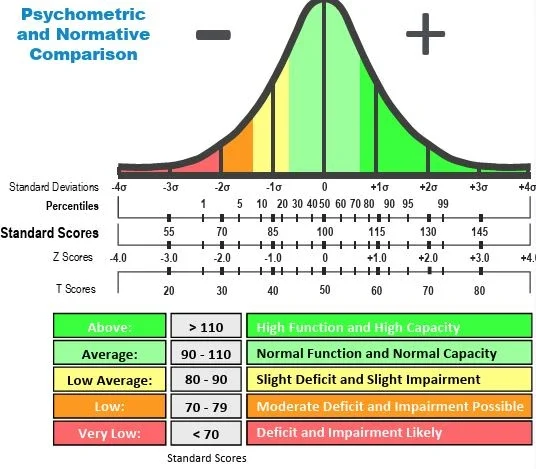
Measures attention, memory, and mood to understand your brain function more fully.

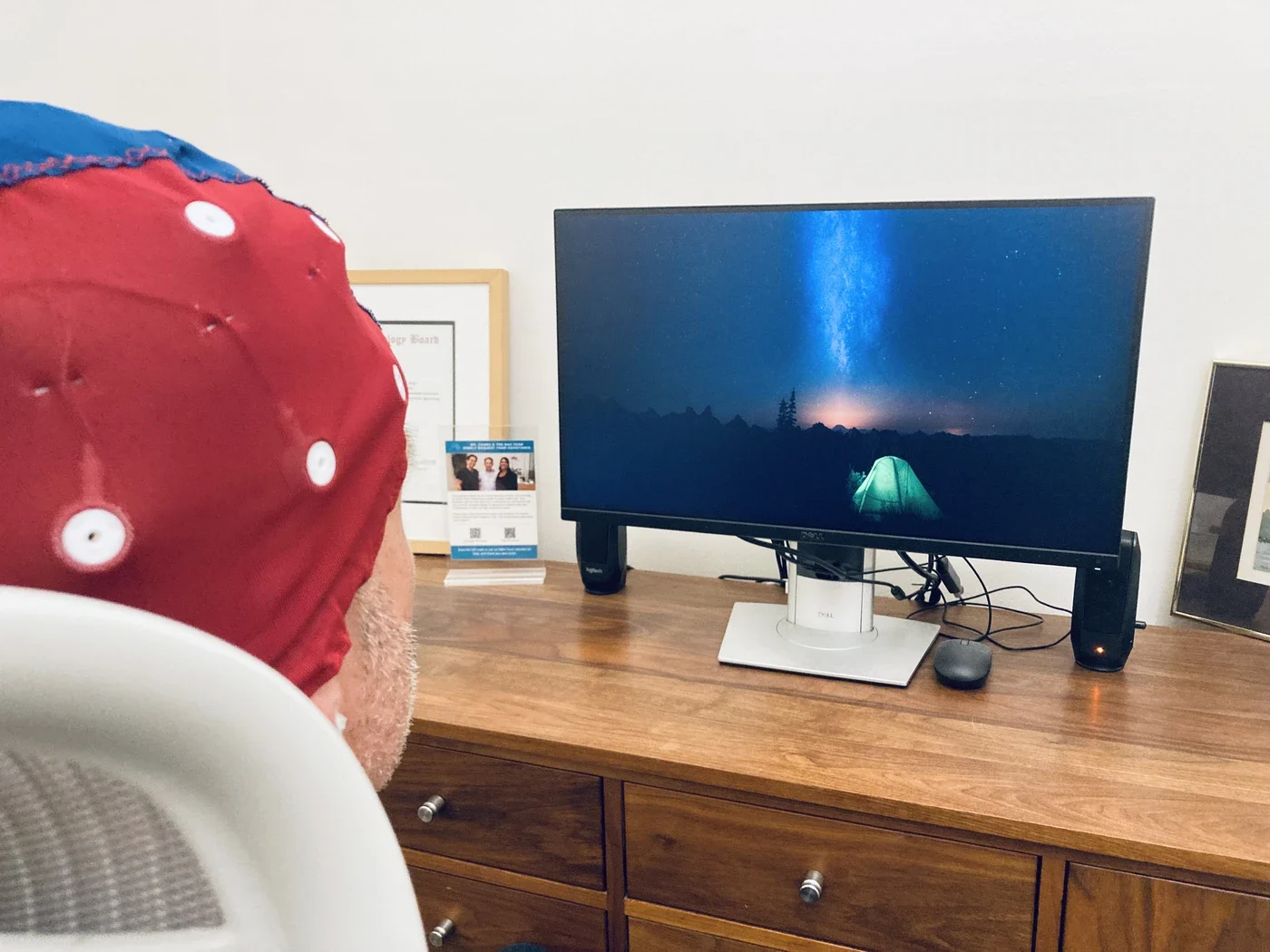
Real-time brainwave training that teaches your brain how to self-regulate mood, focus and optimal function.
Because neurofeedback targets the way networks in the brain communicate, it can be helpful for a wide range of neurological conditions, including:
Our patients share their success stories, highlighting the compassionate care, expert treatment, and lasting results they’ve experienced at NeuroAxis Health in San Francisco.


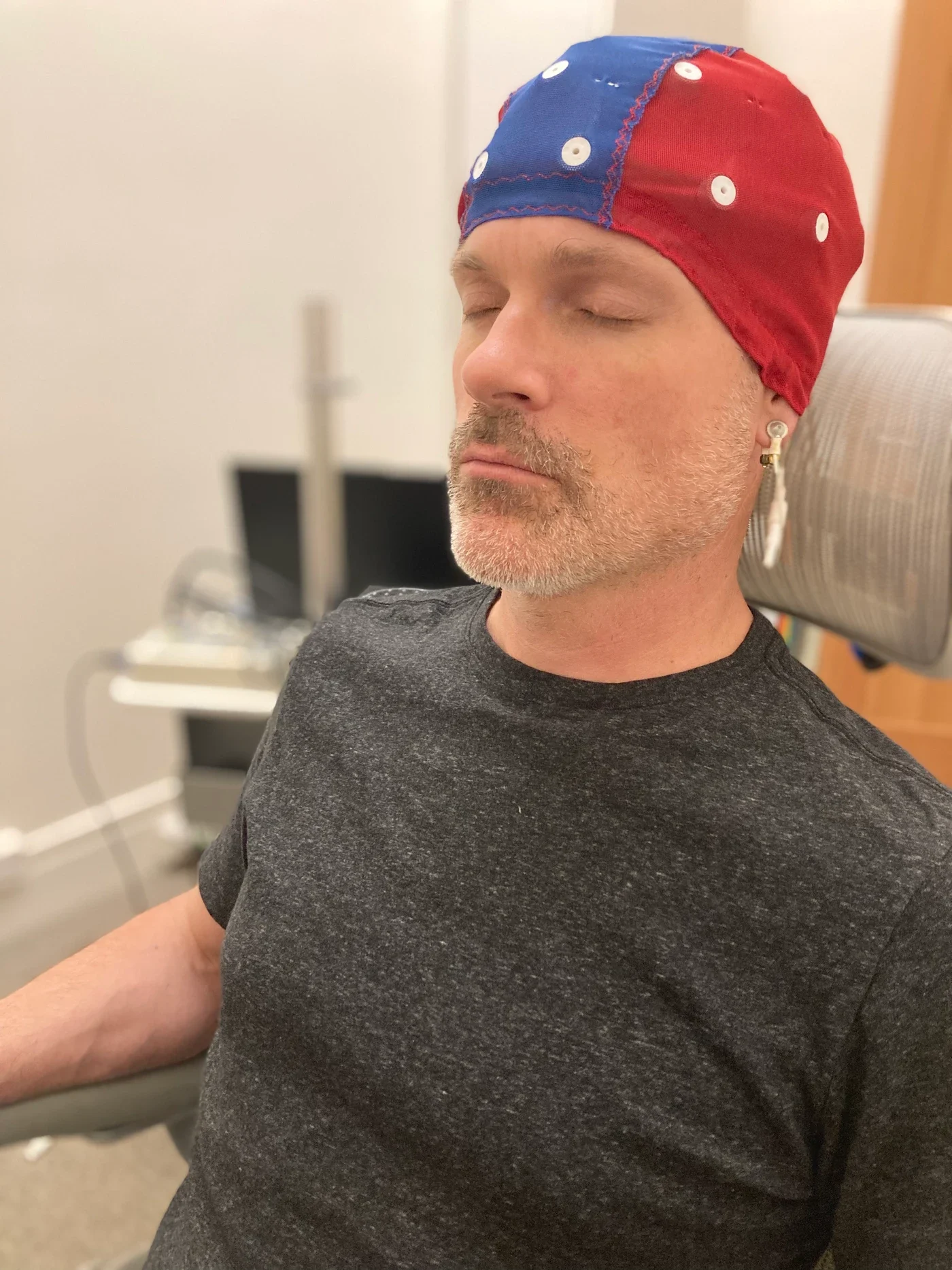
Imagine your brain cells, or neurons, as tiny communicators, constantly sending electrical messages to each other. When many of them “talk” at once, they create a ripple of electricity—a brainwave—that we can actually see with a special tool called an electroencephalography (EEG). We then use computer software to quantitatively measure each type of brainwave and make a visual brain map, called Quantitative EEG (qEEG).
Our unique approach to qEEG analysis involves specialized software to process your brain data and to obtain the most valuable information.
Your brain produces different rhythms that reflect your state of mind and level of activity.
When these rhythms become unbalanced, symptoms such as anxiety, poor sleep, or cognitive decline may follow. qEEG brain mapping reveals these patterns, and neurofeedback helps restore balance for better brain function.
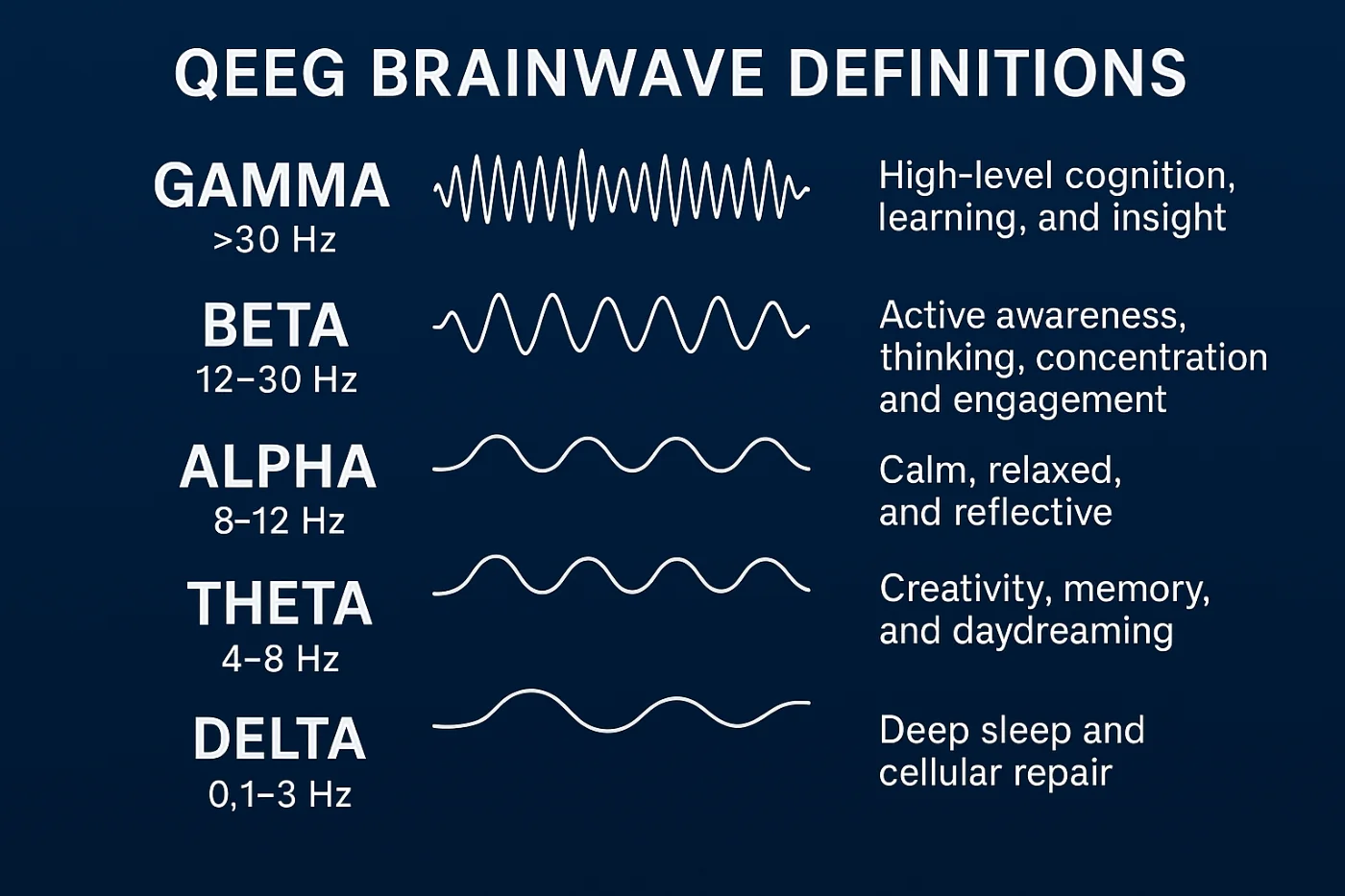
Specific EEG patterns are considered to serve as biomarkers for many physical, emotional and cognitive symptoms.
Traumatic Brain Injury (TBI): often shows focal slowing (delta and theta waves) in regions affected by trauma, reduced alpha power and reactivity, and slowing of the posterior dominant rhythm. Together, these patterns can reflect diffuse white matter injury (structural damage) and disrupted network communication, contributing to symptoms such as brain fog, slowed processing speed, fatigue, and difficulty with concentration and memory.
ADD/ADHD: Excess frontal theta (slow waves) and abnormal alpha coherence can reflect difficulty sustaining attention and a tendency toward daydreaming. Hyperactivity in the anterior cingulate often corresponds to racing thoughts, anxiety and mood dysregulation.
Cognitive Impairment: Slowing of peak alpha, increased frontal theta, and mid‑temporal slow‑sharp waves may signal changes in networks involved in memory, concentration and multi‑sensory processing.
Parkinson’s Disease: Distinct patterns, including hypersynchronous and spindling beta activity, can correlate with stiffness, slowness, and gait freezing. Alpha wave dysregulation in the temporal lobes often reflects many non-motor symptoms.
PostTraumatic Stress: High‑amplitude alpha along the right temporal lobe often indicate mal-adaptive to post-traumatic stress and decreased social, emotional, and spatial awareness.
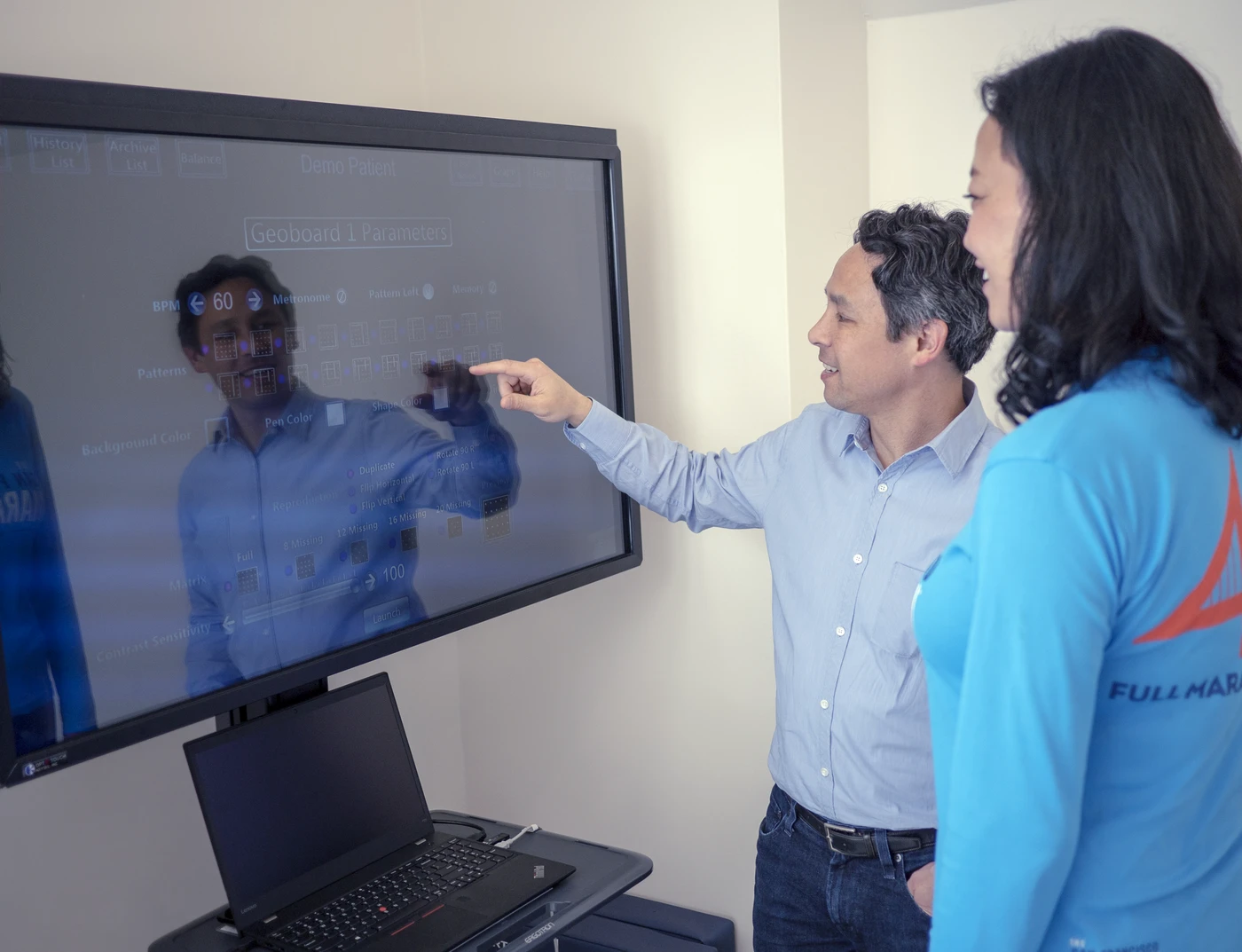
Our team is trusted by neurologists, primary care physicians, and mental health specialists to support patients with complex neurological and psychological conditions. We collaborate with providers who, like us, focus on addressing root causes rather than masking symptoms, creating a model of care that is both holistic and patient-centered.
What sets us apart:
At NeuroAxis Health, we are committed to walking with you every step of the way, helping you heal, strengthen, and thrive with care that is both compassionate and science-driven.

(415) 776-7040